
Herringbone Highlights: The Low-Maintenance Way Winter Park is Embracing Gray
Herringbone Highlights: The Low-Maintenance Way Winter Park Is Embracing Gray
Table of Contents
- What Are Herringbone Highlights
- How the Technique Actually Works
- Why It Is the Low-Maintenance Way to Go Gray
- Who It Works Best For
- Herringbone vs Traditional Highlights vs Balayage
- What to Expect at Your Appointment
- Frequently Asked Questions
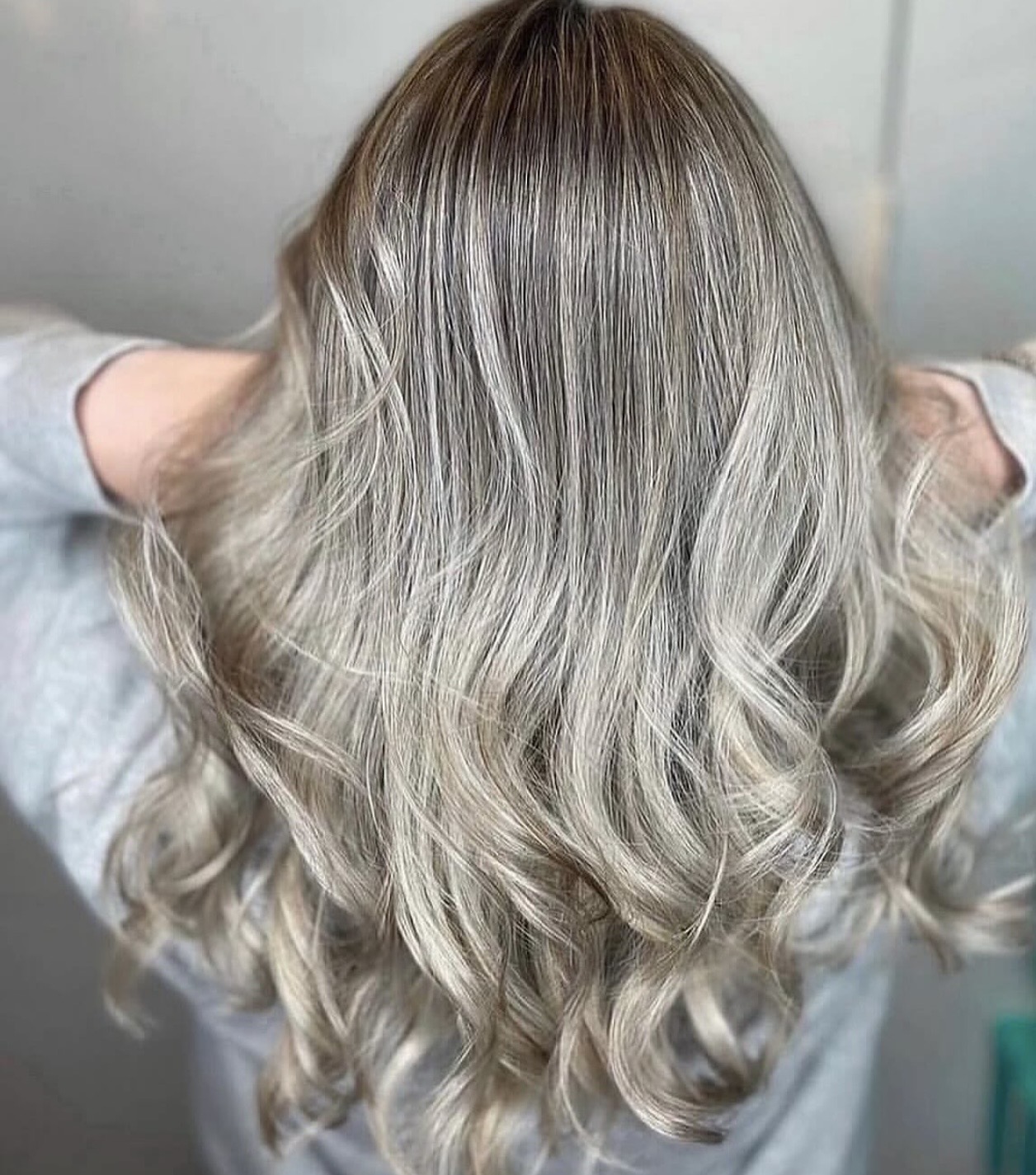
Herringbone highlights are quickly emerging as Winter Park’s favorite way to add an intentional, not grown-out look to gray hair. A colorist never lays foils over your natural hair in rows. Instead, color is placed on the hair in a warm and cool diagonal row, the same overlapping pattern you see in a herringbone tweed jacket. That is why it is more popular this season, because it does not stand out from the rest of the color, it is part of it.
What Are Herringbone Highlights
The majority of highlighting processes layer colors on top of each other. The foils are placed in layers, often in the same direction. Herringbone does just the opposite. The colorist sections hair in a diagonal direction and alternates warm and cool sections to face each other, as if leaning toward each other. For a closer look at how colorists are placing it, Wella Professional’s guide to herringbone highlights breaks down the placement in more detail.
The mere move of that positioning alters everything about how gray reads. When only one color family is applied consistently, silver strands tend to appear as a lighter area on their own. Two or three tones combined in a diagonal pattern give the eye somewhere else to land, so the gray blends into the design instead of standing apart from it.
- Incorporates diagonal crosses rather than straight lines
- Plays at least two tone families, typically one warm and one cool
- It is a placement change, not an additional step like traditional foils, and takes about the same chair time
- Works for gray clients, and also blonde, brunette, and redhead clients
How the Technique Actually Works
This is where most clients are caught off-guard. The stylist is not just choosing two colors and switching back and forth between them. The map is matched to each section so the warm and cool areas align with the client’s existing gray pattern, rather than a generic highlight pattern. The whole point is doing this by hand instead of following a regular foiling chart.
The layout for a client whose gray is concentrated at the crown will differ from one whose gray is concentrated at the temples and part line. Without that experience, a stylist ends up using the technique like a regular highlight service and ends up confused about why the result looks dull. Herringbone work is not about the product, it is about placement.
Why It Is the Low-Maintenance Way to Go Gray
The real cost of most coloring services is the root touch-up, not the appointment itself. With herringbone, the softness of the blended, multi-tone pattern changes that. Instead of a noticeable layer of a single color, new growth at the root reads as just another layer in the weave.
That does not mean zero maintenance. Clients still need a gloss or toner refresh every few months to keep warm and cool tones in sync. But the hard four week deadline that comes with single-process gray coverage simply does not apply to this technique.
Who It Works Best For
This is not only a gray transition service, though that is where it is getting the most attention right now. A few client types tend to get the best results:
- Clients with partial to moderate gray who want to blend it rather than cover it completely
- Anyone tired of frequent root touch-ups who wants fewer salon visits, not more
- Brunettes and redheads who assumed highlights were a blonde-only option
- Clients drawn to a balayage and highlighting service but wanting more dimension at the root
It is not for someone who wants full, solid, uniform tone. Variation is the whole point of herringbone. A single process is still the better choice when uniformity is the goal.
Herringbone vs Traditional Highlights vs Balayage
Clients booking a color consultation often ask how this compares to what they already know. Traditional foiled highlights introduce color in straight, parallel lines, which look lovely when fresh but become noticeable as they grow out. Air touch balayage creates a soft gradient using air to separate strands rather than foil, giving a more hand-painted look than herringbone, but it usually works within one tone family instead of two interwoven ones.
Herringbone sits in the middle. It borrows the natural, grown-in logic of balayage but adds the precision of a mapped foiling pattern, so two tones can do the work together. Traditional single-process color often takes several visits to build a convincing, natural-looking gray blend. Herringbone is designed to get there in one appointment.
What to Expect at Your Appointment
Every herringbone appointment starts with a look at your gray pattern, base color, and how much contrast you want. From there:
- Your stylist builds a custom chart based on where your gray is actually located, not a standard chart
- Lightener and color in warm and cool tones are applied strand by strand in the diagonal weave
- Processing time runs about the same as a standard full highlight service
- The final step is a tone or gloss to even out the warm and cool pieces
If gray blending is specifically your goal, bring a photo of your gray pattern if you have one. That one detail changes where the diagonal sections get placed.
Frequently Asked Questions
What are herringbone highlights?
Herringbone highlights are a highlighting style where warm and cool-toned colors are applied in a diagonal pattern instead of straight rows, blending silver and gray strands into the base color instead of isolating them.
Do herringbone highlights work well for blending gray hair?
Yes. The diagonal, two-tone weave is designed specifically to break up solid areas of gray and work them into the color scheme instead of creating a new area of contrast.
How long do herringbone highlights last between appointments?
Because the regrowth pattern is already blended, most clients stretch appointments out further than they would with traditional single-process gray coverage, since there is no hard root line to chase. Tones are kept balanced in between with a toner refresh every few months.
Is herringbone more expensive than regular highlights?
Chair time runs about the same as a regular full highlight service, since it is a change in placement rather than an additional step. Book a consultation for an exact quote based on your current color, length, and density.
Can I get herringbone highlights with dark or red hair?
Yes. Blondes tend to get photographed with it most often, but it works on brunette and red bases too, since the technique is about mixing two tones together, not about a specific starting color.
Ready to see how herringbone highlights would look on your own gray pattern? Contact us today to book a color consultation at Bonne Vie Salon in Winter Park.