

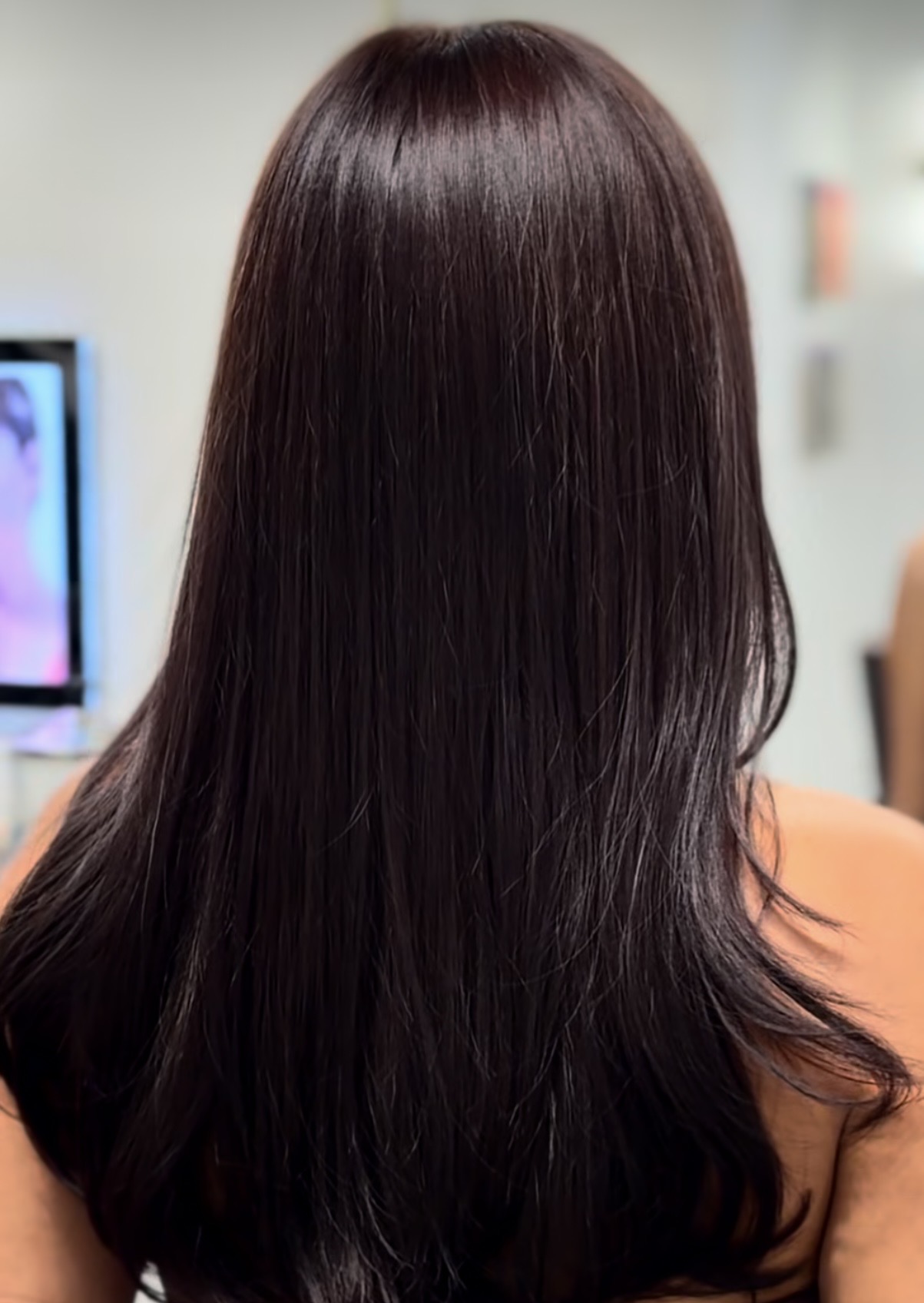
Bond Building Hair Treatments in 2026: Olaplex vs. K18, Which Is Right for Your Hair?
Table of Contents
- What Are Bond-Building Treatments and Why Are They Everywhere in 2026
- How Bond Building Treatments Actually Work
- What Is Olaplex
- What Is K18
- Olaplex vs K18: Key Differences at a Glance
- Which One Is Right for Your Hair
- Cost and Where to Get Each Treatment
- Why Bonne Vie Salon Uses Olaplex
- How to Get the Most Out of Your Bond Building Treatment
- Frequently Asked Questions
One of the most effective hair treatments for reversing color, heat, and chemical damage without cutting length off is a bond-building treatment in Winter Park. Olaplex and K18 are frequently touted as rivals in 2026, but they are not two versions of the same product. One works directly on the disulfide bonds broken during color and lightening services. The other repairs a different part of the hair’s protein structure and is designed to work independently of color. Once you understand that they are not interchangeable, you’ll be able to select the right treatment for your hair.
This post will explain what bond-building treatments are, how they work, the difference between Olaplex and K18, how you can determine which one suits your hair type, and how Bonne Vie Salon in Winter Park uses Olaplex in real color and balayage services.
What Are Bond-Building Treatments and Why Are They Everywhere in 2026
Bond-building treatments work internally on the hair strand, rather than just coating the hair, as with a traditional conditioner or mask. They work on the internal bonds between the amino acids that keep the protein structure in the hair in place, which are also damaged by bleach, permanent color, keratin and straightening treatments, and repeated heat styling.
This category has grown rapidly, as two habits have been on the rise at the same time. People are coloring more often, pursuing balayage and fashion colors, and using hot tools more regularly as part of their styling routine. Both are hard on hair even when it still looks shiny on the outside. A treatment that repairs the internal structure of hair, not just make it look shiny or slippery, solves a problem that a normal conditioner never could. Even though Olaplex and K18 take different approaches to that problem, it’s the same underlying appeal that makes both worth considering.
How Bond Building Treatments Actually Work
Healthy hair depends on the network of internal bonds that hold it in shape, strength, and elasticity. The most important of these are the disulfide bonds, which form between two sulfur-containing amino acids (cysteine) in the hair’s keratin protein. The longer polypeptide chains that these disulfide bonds cross-link are also important for the integrity of hair.
A significant number of these bonds break intentionally during chemical processing, and more break each time hair is heat styled. Hair that feels extremely weak, loses resilience when wet, looks dull, and snaps easily instead of returning to shape has too many broken bonds that have gone unrepaired.
- Bleaching and lightening services break the most bonds, since lightening is one of the most aggressive chemical processes hair can undergo.
- Bonds can also be broken in permanent hair coloring, chemical straightening, or relaxing, though not as aggressively as with lightening.
- Even without any chemical service, repeated heating and cooling from a flat iron or curling iron will gradually weaken bonds through daily use.
- Friction from towels or pillowcases, and stress from brushing wet hair or wearing tight hairstyles, adds up to more damage over time.
Bond builders are designed to interrupt this damage cycle, either by protecting bonds during a chemical service or by rebonding bonds that have already broken. Both of the top two brands in this space go about it in different ways.
What Is Olaplex
Olaplex was the first bond-building system. It was created by Dr. Eric Pressly and Dr. Craig Hawker, introduced in 2014, and is still the benchmark used in salons around the world. It’s built around a patented ingredient, bis-aminopropyl diglycol dimaleate, which locates broken disulfide bonds and re-forms a new, permanent covalent bond between the broken ends before they can oxidize into permanent damage, a mechanism explained in more detail by Olaplex. In short, it’s fast enough to catch the damage during a color or lightening process, rather than repairing it afterward.
The Olaplex system uses a series of numbered products in stages:
- No. 1 Bond Multiplier is applied directly to color or lightener and is used in-salon to protect and rebuild bonds during the chemical service.
- After rinsing color and/or lightener, No. 2 Bond Perfector further links disulfide bonds and locks in the repair completed during the appointment.
- In 2025, the take-home maintenance step got an update: the longtime No. 3 Hair Perfector was replaced by the new No. 3 PLUS Complete Repair Treatment, a fast at-home treatment that repairs bonds and smooths hair in one step.
- Other at-home products, including a bonding oil, shampoo, and conditioner, help maintain the repair between salon visits.
Because Olaplex is built to work alongside color and lightening chemistry, it’s most commonly used by stylists during a color, balayage, or lightening appointment, and it’s also popular as a take-home treatment to maintain the repair between visits.
What Is K18
K18 is a newer player in the bond repair category, launched in 2020, built on a completely different technology. K18Peptide does not directly target the disulfide bond. Instead, K18’s patented biomimetic peptide is designed to mimic a specific sequence of the keratin protein found in hair. The peptide fits into the gaps between the longer polypeptide chains that form the hair’s internal structure, and as a side effect, some disulfide bonds are restored in the process, a process K18 documents on its own science page.
K18 launched as a 4-minute leave-in mask for use at home: shampoo without conditioner (since conditioner can form a film that blocks peptide absorption), leave the mask on for 4 minutes, then style normally without rinsing. Since then, it has expanded into a professional in-salon product and a small range of clarifying pre-shampoo and leave-in styling products built on the same peptide technology.
Because K18 doesn’t rely on color or lightening to activate, working instead on the polypeptide backbone of the hair, it’s a strong choice for people who don’t color their hair at all but still deal with meaningful heat or mechanical damage, as well as for anyone who wants a fast leave-in step on a regular wash day without booking a salon appointment.
Olaplex vs K18: Key Differences at a Glance
| Feature | Olaplex | K18 |
|---|---|---|
| Technology | Bis-aminopropyl diglycol dimaleate re-links broken disulfide bonds. | Biomimetic K18Peptide repairs broken polypeptide (keratin) chains and helps restore disulfide bonds. |
| Launched | 2014 | 2020 |
| Built for | Use during and after color or lightening services | Standalone repair, with or without a color service |
| Typical setting | Built into in-salon color appointments, with a take-home step to maintain it | An at-home leave-in mask, also available as an in-salon add-on |
| Best for | Hair that is regularly colored, lightened, or chemically treated | Clients concerned mainly with heat or mechanical damage, or who want a quick leave-in step |
Which One Is Right for Your Hair
The right choice depends less on which brand has the best marketing and more on where the damage is happening and how your hair is colored.
- If your hair is damaged mainly from color, lightening, or balayage, treatments built into the color process itself, such as Olaplex No. 1 and No. 2, can address the damage before it happens.
- If you don’t color your hair often but use heat tools frequently, a standalone leave-in product like K18 can help, since heat and mechanical stress damage hair whether or not it’s chemically processed.
- If you get color regularly at a salon, ask your stylist which bond repair system is integrated into their color line. Consistency between appointments matters more for long-term hair health than the exact brand on the bottle.
- Many clients use Olaplex in-salon with their color service, then apply a K18 leave-in product during off-weeks for extra protection from heat damage. The two products complement each other since they target different structures and can be used together.
It’s also worth keeping expectations realistic about both products. They can add strength, elasticity, and manageability to chemically or heat-damaged hair, but they will not repair or reverse split ends or broken hair. The difference will be more noticeable on heavily processed or damaged hair than on virgin or minimally processed hair, since there is more damage to repair.
Cost and Where to Get Each Treatment
Olaplex’s in-salon steps are usually included in the price of a color or lightening service rather than charged as a separate line item, since No. 1 and No. 2 are part of the color process itself. Salons can also offer a standalone Olaplex treatment, on top of a color service, for clients who want extra repair between color appointments. The take-home No. 3 PLUS is sold retail for at-home maintenance.
K18 has become popular both as a retail leave-in mask and as an in-salon add-on used after color, lightening, or chemical services. The leave-in mask is one of the simpler bond treatments to work into a wash day routine, without the extra step of rinsing or extra time at the sink.
Why Bonne Vie Salon Uses Olaplex
Unlike some salons, we don’t offer Olaplex as a separate service you need to know to ask for. We integrate it directly into our color, balayage, and lightening services. Because our colorists use it as part of the color process itself, it’s applied to the damage in real time rather than fixing it afterward, which is where the real difference in long-term hair health tends to show.
If you already get balayage or highlights from us, you already trust us to protect your hair during that service, which is exactly what Olaplex does. Clients who want an extra standalone treatment between color services can also add our in-salon Olaplex treatment, which restores strength and shine without requiring a full color service, alongside a heat protectant home care routine.
How to Get the Most Out of Your Bond Building Treatment
- If you color frequently, schedule a standalone bond-building treatment every 4 to 6 weeks to match the pace of your chemical processing.
- Between salon appointments, use a sulfate-free shampoo so you don’t wash away the results you just had done.
- For the first couple of days after a treatment, limit heat styling to once a day for a short time, so the newly formed bonds can fully set.
- Let your stylist know about any at-home bond repair products you’ve used, such as Olaplex or K18, so they can plan the salon service around it and avoid duplicating the treatment.
- Use a bond builder on styling days alongside a light heat protectant. The bond builder repairs existing damage, but it will not fully prevent new heat damage on its own.
Frequently Asked Questions
What is the difference between Olaplex and K18?
Olaplex’s active ingredient is designed to re-link broken disulfide bonds directly, and it’s formulated to work during and after color or lightening treatments. K18 uses a different, peptide-based technology that reattaches broken polypeptide chains in the hair’s cortex, designed as a standalone leave-in treatment whether or not your hair is colored.
Can I get a bond-building treatment if I do not color my hair?
Yes. Heat styling, mechanical damage from brushing, tight hairstyles, and friction all damage hair bonds even without any color service, and a bond-building treatment can help with all of this.
How often should I get an Olaplex treatment?
Most clients get Olaplex as part of every color appointment, plus a standalone treatment every 4 to 6 weeks in between color appointments or other chemical processing.
Is Olaplex safe for all hair types?
Olaplex can be used on all hair types and textures, including color-treated, chemically straightened, and naturally curly hair. Your stylist can recommend the right frequency and application for your specific hair.
Can Olaplex be combined with balayage or keratin treatments?
Yes. Olaplex is often built into balayage and lightening formulas to minimize damage during the process, and it can also be used alongside keratin services as part of a full hair health plan.
Can I use K18 and Olaplex together?
Many clients do. The two technologies play different roles: one is typically applied during an in-salon color service, and the other is used at home between color appointments.
Looking for a solution to repair and strengthen your hair? Make an appointment at Bonne Vie Salon in Winter Park and ask about adding Olaplex to your next color appointment.